
Why Do You Feel Dizzy When You Move Your Head? Pravigya ENT Offers Advanced BPPV Treatment in Indira Nagar, Lucknow
Estimated reading time: 5 min read
Key Takeaways
- BPPV is the leading cause of positional dizziness; a quick Dix-Hallpike test at Pravigya ENT & Vertigo Clinic in Lucknow can confirm the diagnosis and guide a curative canal-repositioning manoeuvre.
- Opt for evidence-based manoeuvres over long-term medication to resolve vertigo, prevent falls, and regain your confidence in daily head movements.
- Persistent or atypical dizziness deserves expert evaluation; early consultation with Dr Pratishta Sachan ensures accurate diagnosis and tailored vestibular care under one roof.
Table of Contents
- Section 1: What Is BPPV and Why Does Head Movement Trigger Dizziness?
- Section 2: How Does Dr Pratishta Sachan Confirm BPPV in Lucknow?
- Section 3: Canal-Repositioning Manoeuvres—Gold-Standard Treatment at Pravigya ENT
- Section 4: Home Exercises and Lifestyle Tweaks to Prevent Recurrence
- Section 5: When Is Dizziness a Red Flag and How Quickly Should You Seek Help?
- Section 6: Why Pravigya ENT & Vertigo Clinic Is Lucknow’s Preferred Destination for Dizziness and Balance Disorders
- Conclusion
- Call to Action
Pravigya ENT & Vertigo Clinic, led by Dr Pratishta Sachan—the best vertigo specialist in Lucknow—provides expert BPPV (Benign Paroxysmal Positional Vertigo) diagnosis and canalith-repositioning manoeuvres right here in Indira Nagar, Lucknow. If a simple roll in bed, looking up at a shelf, or checking your blind-spot while driving triggers a sudden spin, this guide will explain why, how long it may last, and what evidence-based treatment options are available locally.
Section 1: What Is BPPV and Why Does Head Movement Trigger Dizziness?
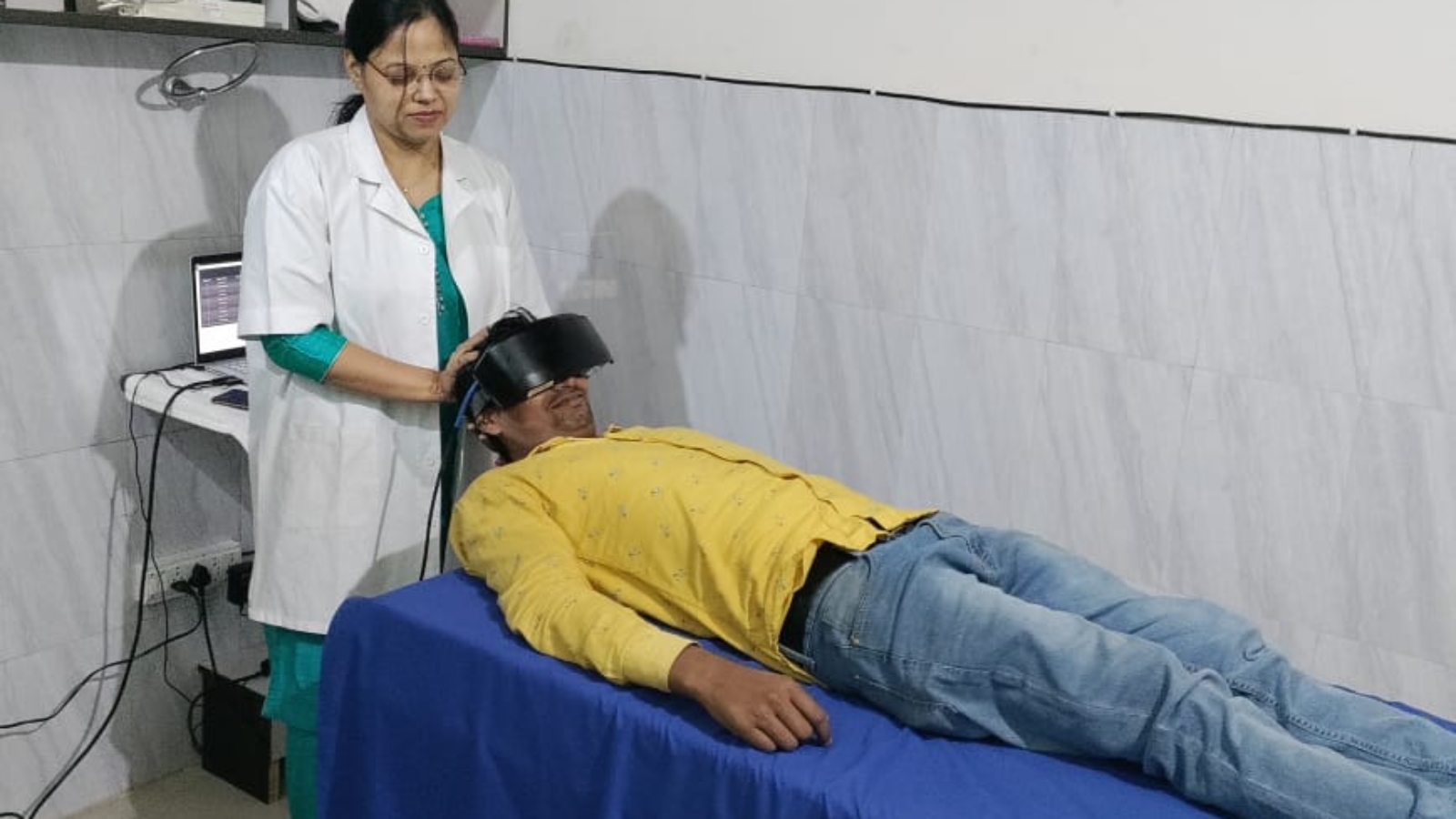
BPPV is the commonest cause of recurrent, brief rotational vertigo. Tiny calcium-carbonate crystals (otoconia) that normally sit in the utricle of the inner ear get dislodged and slip into one of the semicircular canals—usually the posterior canal. When you tilt or turn your head, gravity makes these rogue crystals tumble, sending false signals of spinning to the brain. Patients often describe the room whirling for 5–30 seconds, sometimes with nausea. The first step is recognising the pattern: dizziness brought on by positional change, resolving within a minute, and repeating whenever the head returns to that plane. At Pravigya ENT & Vertigo Clinic in Lucknow, Dr Pratishta Sachan combines a targeted Dix-Hallpike test with high-definition video Frenzel goggles to confirm which canal is affected—critical knowledge before any canal-repositioning manoeuvre.
Section 2: How Does Dr Pratishta Sachan Confirm BPPV in Lucknow?
Accurate diagnosis is what sets the best vertigo specialist apart. After noting your symptom diary, the doctor performs positional tests on an electronically controlled vertigo couch. Positive nystagmus—characteristic jerky eye movements—confirms BPPV and even hints at the involved canal. Unlike generic ENT setups, Pravigya ENT & Vertigo Clinic offers vestibular function tests (vHIT, VEMPs) under one roof, ruling out concurrent vestibular hypofunction or migraine-associated vertigo, both of which can mimic or coexist with BPPV. Patients from Gomti Nagar, Jankipuram, Vikash Nagar and Sushant Golf City appreciate the convenience of getting a definitive answer within a single 45-minute consultation rather than shuttling between imaging centres.
Section 3: Canal-Repositioning Manoeuvres—Gold-Standard Treatment at Pravigya ENT
Once the diagnosis is certain, evidence-based manoeuvres can clear the crystals from the canal. For posterior-canal BPPV (≈85% of cases), Dr Sachan performs the Epley manoeuvre, a sequence of four timed head positions that utilise gravity to migrate crystals back into the utricle. Horizontal-canal variants receive the BBQ-roll or Gufoni manoeuvre. The clinic’s success rate exceeds 90% after one or two sessions. Patients are given customised post-manoeuvre care cards and discouraged from sleeping flat for the first night—simple precautions that significantly lower 30-day recurrence. Compared to medication like cinnarizine that merely suppresses symptoms, canalith-repositioning tackles the root cause and is drug-free, an aspect valued by expectant mothers and the elderly in Indira Nagar.
Section 4: Home Exercises and Lifestyle Tweaks to Prevent Recurrence
Although BPPV can be cured, new dislodgement can occur, especially after head trauma, prolonged bed-rest, or osteoporosis. Brandt-Daroff exercises performed twice daily for two weeks help habituate the vestibular system. Adequate vitamin-D and calcium intake improve otoconial stability; Pravigya ENT offers a quick on-site bone-density screening package. Ergonomic advice—like avoiding prolonged neck extension while painting ceilings or using smartphones—goes a long way. Patients who commute on bumpy Lucknow metro routes or work at construction sites are counselled on neck support and hydration. Remember, dizziness on head movement is not always BPPV; cervical spondylosis, vestibular migraine and even anxiety can overlap. Hence, any new aura, hearing fluctuation, or headache warrants prompt review with the neuro-otologist.
Section 5: When Is Dizziness a Red Flag and How Quickly Should You Seek Help?
Sudden vertigo with vomiting, facial asymmetry or slurred speech may signal posterior-circulation stroke—call emergency services. However, isolated positional vertigo without neurological signs is rarely sinister. The real danger lies in misdiagnosis and falls; elderly patients in Munshi Puliya have fractured hips during nocturnal BPPV spells. Booking an early appointment with the best vertigo specialist in Lucknow ensures timely manoeuvres, reduces fall risk, and restores confidence. Pravigya ENT & Vertigo Clinic offers same-day tele-consultation for acute recurrences, sparing you a trip when you are actively spinning.
Section 6: Why Pravigya ENT & Vertigo Clinic Is Lucknow’s Preferred Destination for Dizziness and Balance Disorders
Convenience, technology and empathy define the practice. Located opposite the Hanuman Mandir in Indira Nagar, the clinic is wheelchair-friendly and equipped with a ceiling-mounted rail to steady anxious patients during tests. Dr Pratishta Sachan’s dual training in ENT and neuro-otology means your hearing, ears, nose, throat and balance are evaluated holistically. Services span comprehensive ENT consultation, ear wax removal via micro-suction, hearing-loss evaluation, tinnitus retraining therapy, sinus and allergy management, throat & voice disorders, nasal blockage assessment, vestibular rehabilitation therapy, migraine-associated vertigo care, and, of course, BPPV treatment. Positive patient testimonials highlight short waiting times, transparent billing, and post-treatment follow-up calls—small touches that build trust.
Conclusion
- BPPV is the leading cause of positional dizziness; a quick Dix-Hallpike test at Pravigya ENT & Vertigo Clinic in Lucknow can confirm the diagnosis and guide a curative canal-repositioning manoeuvre.
- Opt for evidence-based manoeuvres over long-term medication to resolve vertigo, prevent falls, and regain your confidence in daily head movements.
- Persistent or atypical dizziness deserves expert evaluation; early consultation with Dr Pratishta Sachan ensures accurate diagnosis and tailored vestibular care under one roof.
Call to Action
Stop letting head-spinning moments dictate your mornings. Visit Pravigya ENT & Vertigo Clinic in Indira Nagar, Lucknow, for a comprehensive vertigo assessment and same-day canal-repositioning manoeuvre. Call 0522–430–8888 or book online to secure your slot with Dr Pratishta Sachan—because steady balance and clear hearing transform life, today.
Frequently Asked Questions
What is BPPV?
BPPV (Benign Paroxysmal Positional Vertigo) is the most common cause of brief, recurrent rotational vertigo. It occurs when tiny calcium crystals (otoconia) in the inner ear become dislodged and move into a semicircular canal, sending false signals to the brain when the head is moved.
How is BPPV diagnosed?
Diagnosis involves the Dix-Hallpike test, which triggers characteristic eye movements (nystagmus) when the head is positioned in a specific way. At Pravigya ENT, video Frenzel goggles and vestibular function tests like vHIT and VEMPs may also be used to confirm the affected canal and rule out other conditions.
What is the treatment for BPPV?
The gold-standard treatment is canalith-repositioning manoeuvres, such as the Epley manoeuvre for posterior canal BPPV. These maneuvers use gravity to guide the displaced crystals back to their proper location. They are highly effective, with success rates over 90% after one or two sessions, and are drug-free.
Can BPPV be prevented?
While BPPV can be cured, recurrence is possible. Performing Brandt-Daroff exercises, maintaining adequate vitamin D and calcium levels, and avoiding prolonged neck extension can help reduce the risk. Bone-density screening is also recommended, especially for older adults.
When should I seek emergency care for dizziness?
Emergency care is needed if dizziness is accompanied by vomiting, facial asymmetry, or slurred speech, as these may indicate a stroke. Isolated positional vertigo without neurological symptoms is usually not an emergency, but prompt evaluation is still advised to prevent falls and ensure proper treatment.
Add a Comment