
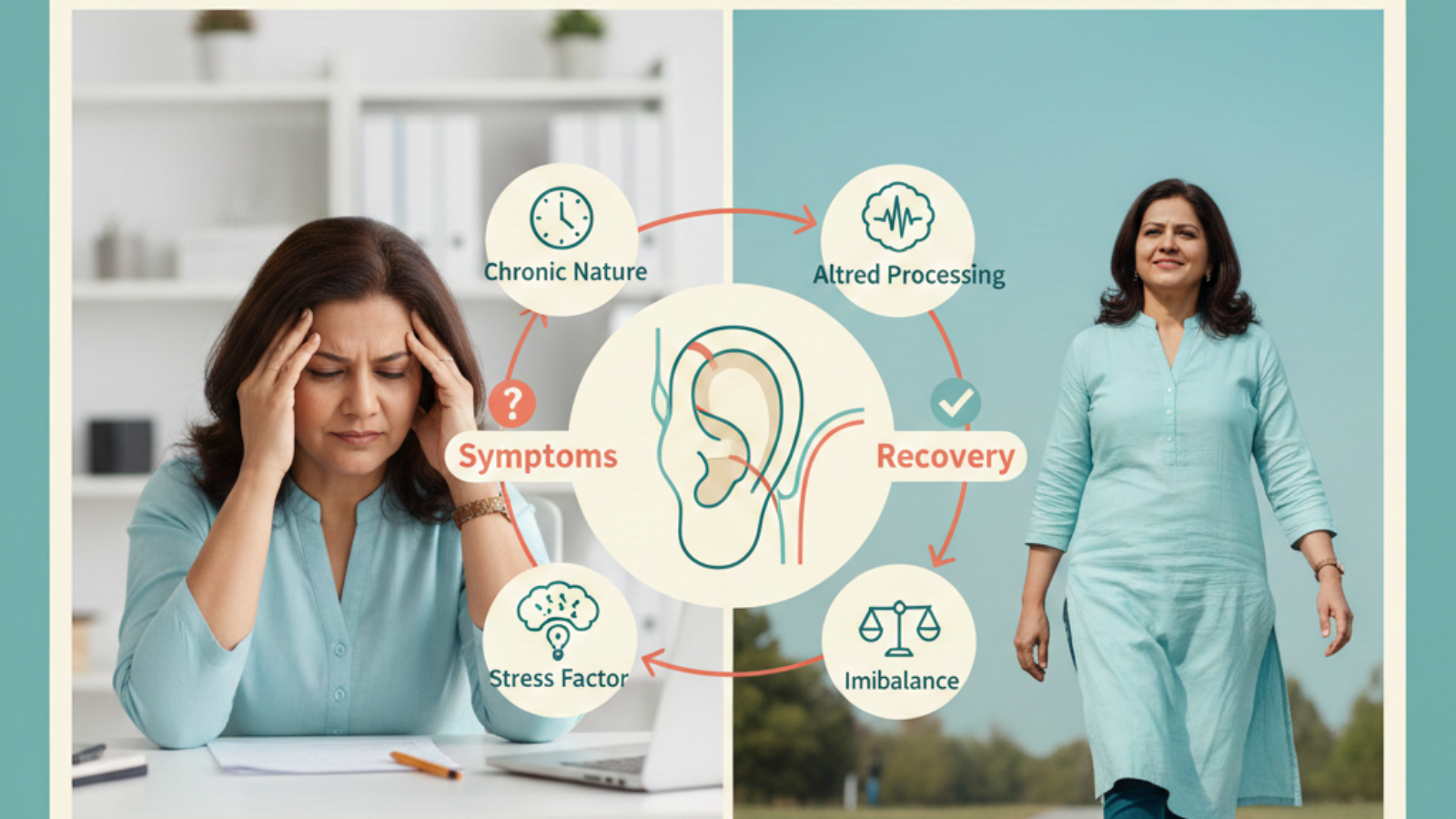
Introduction to PPPD
Persistent Postural-Perceptual Dizziness (PPPD) is a chronic vestibular disorder that causes persistent sensations of dizziness, imbalance, and unsteadiness that can severely impact daily life. Unlike transient dizziness, PPPD is a prolonged condition often triggered by an initial vestibular insult but perpetuated by changes in the brain’s processing of balance signals.
Who is Affected?
PPPD commonly affects elderly men and women, professional individuals who face high stress, and anyone prone to vestibular disturbances. Its chronic nature demands specialized diagnosis and management.
Understanding the Symptoms
Key symptoms of PPPD include ongoing dizziness, a sensation of rocking or swaying while standing or sitting still, sensitivity to motion, and difficulty concentrating. Unlike acute vertigo, PPPD symptoms are continuous but non-spinning.
Causes and Risk Factors
PPPD can be triggered by various conditions such as vestibular neuritis, BPPV (Benign Paroxysmal Positional Vertigo), migraines, or even psychological stress. Elderly people and professionals under stress are more vulnerable due to combined physical and mental triggers.
Diagnostic Approach
Diagnosis involves thorough clinical evaluation, including detailed patient history, vestibular function tests like Video Nystagmography (VNG), Posturography, and advanced assessments available at specialized clinics such as Pravigya ENT, Vertigo & Sialendoscopy Clinic under Dr. Pratistha Sachan.
Treatment and Management
Managing PPPD needs a comprehensive approach:
- Vestibular rehabilitation therapy to retrain balance
- Medications to address associated anxiety or migraine
- Lifestyle modifications to avoid triggers and stress management
Dr. Pratistha Sachan’s clinic offers precision diagnosis and targeted treatment protocols customized to each patient.
Living With PPPD: Real-Life Examples
Many elderly patients regain confidence post-treatment and professional patients report improved focus and balance enabling better productivity. Consistent rehabilitation and clinical follow-up are key.
How to Support a Loved One with PPPD
Patience, understanding the invisible nature of dizziness, and encouraging compliance with therapy hugely benefit recovery.
Why Choose Dr. Pratistha Sachan?
With over 14 years of experience and expertise in advanced vestibular diagnostics and treatments, Dr. Sachan ensures a high success rate for PPPD and chronic imbalance disorders. The clinic is equipped with state-of-the-art testing modalities and a patient-centric approach.
Mid-content soft CTA: If you or a loved one experiences persistent dizziness or imbalance, consult Dr. Pratistha Sachan at Pravigya Clinic for an expert assessment.
Preventive Measures
Regular balance exercises, managing blood pressure, stress reduction, and timely treatment of ear infections can minimize risks.
Conclusion
Persistent Postural-Perceptual Dizziness is a chronic condition that requires expert diagnosis and multi-modal treatment to restore balance and quality of life for affected individuals.
Key takeaway 1:
PPPD is a chronic vestibular disorder causing persistent dizziness and imbalance.
Key takeaway 2:
Early diagnosis and vestibular rehabilitation significantly improve outcomes.
Key takeaway 3:
Expertise of Dr. Pratistha Sachan and advanced diagnostics offer reliable treatment for PPPD sufferers.
For personalized care and effective management of PPPD, schedule a consultation with Dr. Pratistha Sachan today at Pravigya ENT, Vertigo & Sialendoscopy Clinic.
Add a Comment